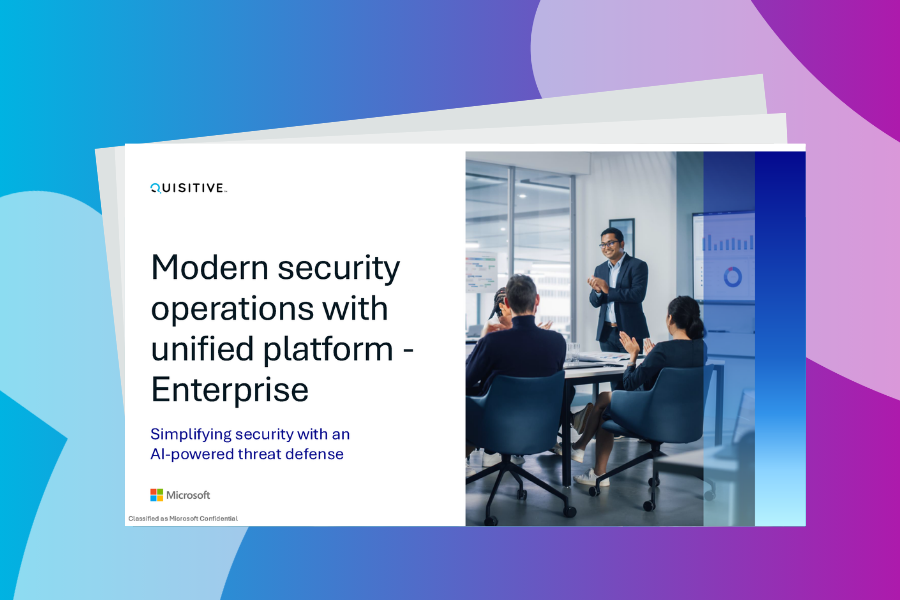
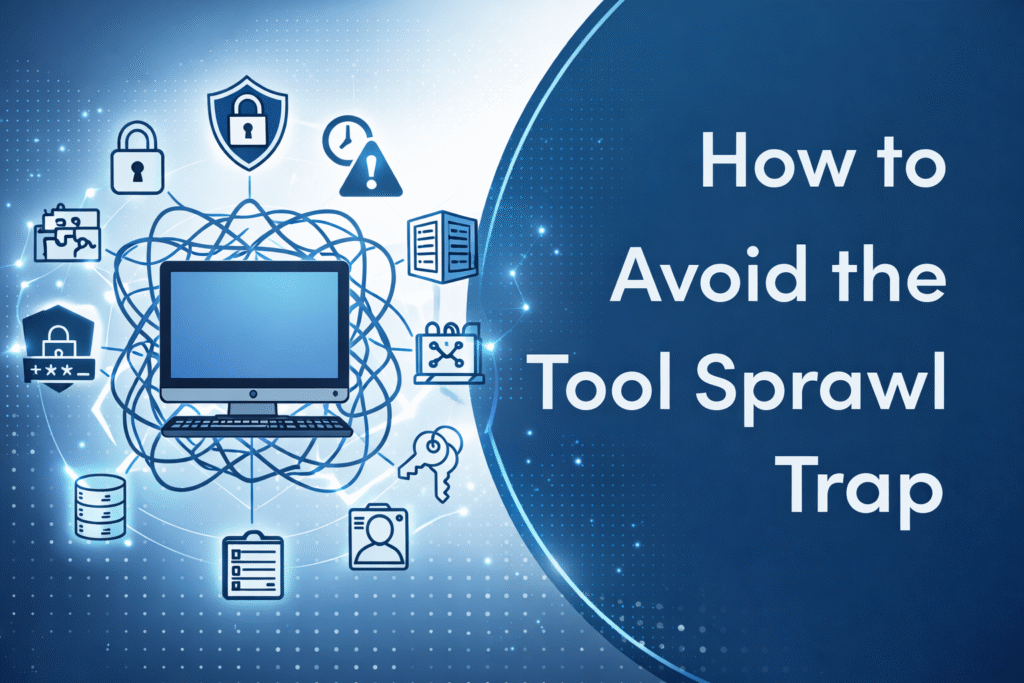
Security teams are spending more money than ever before, but they’re not getting safer. In fact, most organizations today are detecting breaches more slowly, struggling under the weight of overlapping systems, misconfigured tools, conflicting dashboards, and manual processes that never seem to end.
The root cause? Tool sprawl.
What is Tool Sprawl?
Across security and GRC, enterprise environments have expanded into a tangled ecosystem of SIEMs, scanners, cloud-native security suites, specialty governance tools, standalone compliance platforms, identity add‑ons, endpoint agents, and “quick fix” point solutions purchased to solve a single problem but rarely retired afterward.
Tool sprawl is the collection of too many tools in your IT department, often leading to redundancy and higher costs for your company.
The result isn’t resilience. It’s risk, cost, and operational drag.
More Tools, Less Security
Most organizations now operate with 60-80+ security tools spread across identity, data protection, endpoint, threat detection, compliance, governance, cloud posture, and more.
But each new “solution” introduces:
1. Budget Drain
- Duplicate or overlapping capabilities cost organizations millions in unnecessary licensing.
- Tools embedded in existing Microsoft investments, especially E5 customers, often go unused while teams continue to pay for third‑party tools with lower integration and higher cost.
- SIEM ingestion bloat dramatically increases cloud security costs. Duplicate logs, unnecessary data sources, and long-term retention strategies inflate monthly spend.
2. Increased Complexity and Risk
- More dashboards = more blind spots, not fewer.
- Alert fatigue hides real threats behind thousands of false positives.
- Lack of integration means teams miss context across systems; they’re stuck manually stitching together logs, reports, and dashboards.
In multiple real-world cases, organizations with large tool stacks have reported hour‑long delays in identifying real threats because critical alerts were buried inside noisy SIEM events or distributed across tools that don’t correlate well together.
3. Compliance Sprawl
- More tools mean more systems to document, validate, audit, and maintain.
- Controls drift because each tool follows its own configuration patterns.
- GRC teams spend their time chasing evidence across disconnected systems instead of driving governance strategy, risk reduction, or program maturity.
Why Tool Sprawl Happens: The Multi‑Department Spiral
Tool sprawl typically occurs unintentionally, gradually expanding across various departments.
- Security buys specialized tools for threat detection and response.
- IT implements operational tools for patching, access management, configuration, and monitoring.
- Compliance purchases GRC platforms to manage audits, assessments, and control mapping.
- Cloud and DevOps teams adopt platforms and specific tools for visibility and configuration.
While each team possesses valid requirements, the absence of a cohesive governance strategy can result in operational silos and unchecked expansion of the toolset.
The Hidden Cost of Tool Sprawl Is Time
In addition to expenses like licensing, there’s another cost that’s harder to see but just as harmful: the toll on team morale and productivity. When hidden costs such as frequent miscommunication, unclear project ownership, or inefficient processes accumulate, they can quietly undermine the effectiveness of an entire organization.
Over time, these issues may lead to employee burnout, missed deadlines, and increased turnover, making it crucial to address both visible and invisible costs when planning projects or managing resources.
Time and Analyst Burnout
- Correlating data across SIEMs, identity platforms, and vulnerability tools consumes enormous analyst bandwidth.
- Manual investigations slow response times and increase dwell time.
- Governance teams waste countless hours gathering evidence from scattered systems.
In many organizations, teams are so busy maintaining tools that they have little capacity left to use them effectively.
How to Break the Tool Sprawl Cycle
Breaking free from tool sprawl doesn’t require a massive overhaul or starting from scratch. Here are practical steps organizations can take to regain control, reduce costs, and maximize the value of their security investments:
1. Maximize Existing Investments
- Inventory and evaluate security tools already owned, especially those included with enterprise agreements like Microsoft E5.
- Identify underutilized capabilities, such as Defender for Endpoint, Entra ID, Purview, Sentinel SIEM/SOAR, CSPM, and vulnerability management, and prioritize their adoption over redundant third-party solutions.
- Consolidate workloads where possible to reduce overlap, cost, and complexity.
2. Optimize SIEM Ingestion and Data Management
- Review and streamline log ingestion to focus on essential data sources.
- Eliminate duplicate or unnecessary logs and apply right-sized retention policies to control costs.
- Leverage use-case scoping and analytics tuning to reduce noise and improve signal quality for security analysts.
3. Streamline Governance and Compliance
- Unify and automate governance, risk, and compliance processes.
- Align controls and evidence gathering with native platform capabilities to reduce manual work and system sprawl.
- Shift from reactive audits to proactive, continuous improvement in governance posture.
4. Prioritize Automation and Continuous Improvement
- Automate routine investigations, reporting, and compliance checks where possible to free up analyst time for higher-value work.
- Establish ongoing processes for configuration review, workflow optimization, and skills development, ensuring that improvements are sustained over time.
- Encourage collaboration across teams to break down silos and align on shared security goals.
5. Leverage Expert Guidance and Holistic Solutions
Sometimes, the key to breaking persistent cycles is to seek outside perspective and specialized support. Solutions such as security assessments, expert coaching, and integrated platforms can help organizations:
- Uncover redundancies and shift workloads to existing investments, maximizing value from platforms like Microsoft E5.
- Reduce SIEM ingestion costs through targeted data strategies and architecture recommendations.
- Streamline governance and compliance by consolidating tools and automating evidence collection.
- Eliminate security blind spots with regular program reviews, hands-on workshops, and continuous coaching to stay ahead of evolving threats.
- Accelerate automation in routine tasks, empowering analysts to focus on real threats rather than busy work.
For example, Quisitive Spyglass®, our proactive security and compliance program, is designed for IT teams managing Microsoft environments and combines real-time monitoring, remediation, and compliance tracking with expert advisory services. This approach enables sustainable improvement without disruptive migrations, ensuring your security strategy remains effective, efficient, and aligned with business priorities.
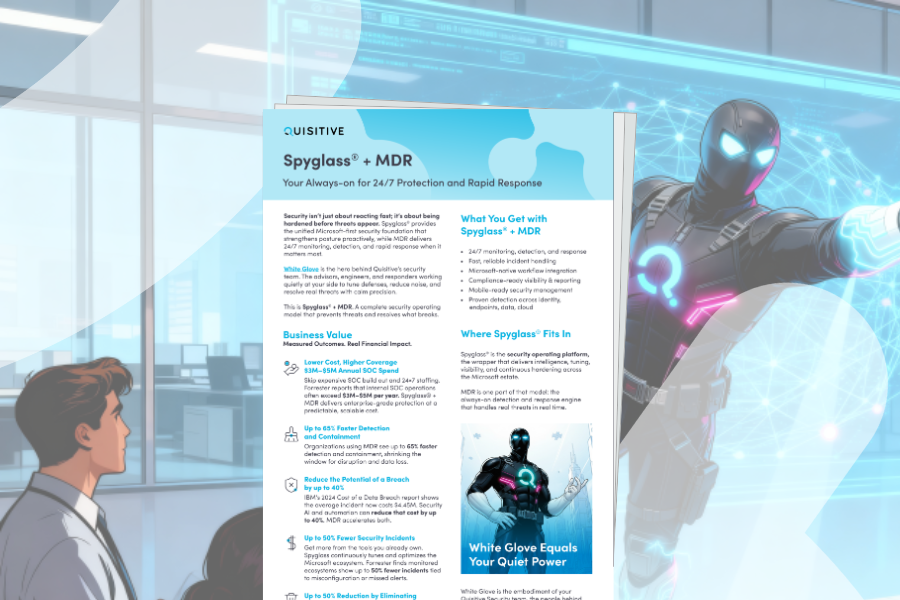
Get the Full Spyglass ROI Summary
See how you can reduce tool sprawl and unlock cost savings with our Spyglass Security and Compliance Program.
So, What Does This Mean for You?
If your organization faces issues such as a bloated stack, uncontrolled budget, slow detection times, difficult audits, burned-out teams, or underused Microsoft investments, you’re not alone. There are practical steps you can take to improve.
By focusing first on maximizing existing tools, optimizing operations, and embracing automation, you can break the tool sprawl cycle. And with the right guidance, you can drive lasting security outcomes, without the need for expensive “rip and replace” projects.