Five years ago, Power Platform was the scrappy tool citizen developers slipped past IT. This October in Las Vegas, it was the main event. More than 9,000 people packed the MGM Grand for the fifth Power Platform Community Conference, and the question in the room had shifted. People have stopped asking whether low code works. They want to know how to run it across an enterprise in a governed way.
We spent the week talking to organizations from around the world. At Booth #400, over a phenomenal dinner with manufacturing leaders at Morimoto, around a lunch with healthcare leaders at MGM Skyloft, and behind closed doors in our Skyloft suite, our team talked with hundreds of people who have already proven the platform and are ready for the next stage.
If you were one of them, thank you. Here is what we brought home.
What Microsoft put on the table
Power Platform now has 80 million monthly active users, up from 56 million a year ago. Daily Power Apps usage climbed 20%, flow runs matched it, and AI use inside Power Apps has more than doubled. Charles Lamanna made the point of saying the platform is in the best shape of its life, which should quiet the “will Copilot replace it” chatter for a while.
PPCC is retiring its acronym. Next year the conference moves to Chicago, November 2 to 4, 2027, as Maker Con. Microsoft also launched the Microsoft Maker Community, a single home for anyone building in Power Platform, Copilot Studio or Copilot. Read that as a statement of intent. Microsoft now sees the pro developer, the IT admin and the analyst building her first app from a prompt as one audience, and IT leaders should plan with that in mind.
The keynote was built on four ideas: better tools, more makers, no cliffs and value at scale.
- Apps from a sentence. Describe what you need in Copilot Cowork or Copilot Studio and get back a working app wired to your data. App building in Copilot Studio is now in public preview.
- No more rebuilds. Every AI-built app is real code underneath. When one turns business critical, a developer can pick it up in Visual Studio Code or GitHub Copilot and keep going. Microsoft calls it “no cliffs.” We call it the end of the rewrite tax.
- A proper home for vibe-coded apps. Copilot Managed Runtime hosts apps built in Cowork, Code, Copilot Studio or third-party tools on Microsoft infrastructure, under the policies your admins already set.
- Agents that show up like coworkers. Copilot Studio agents can now carry their own account, mailbox, OneDrive and process memory. You can email one, pull it into a Teams chat and hand it work that runs for days.
- Your existing work gets smarter. Through Work IQ, now in public preview, the apps, flows and Dataverse data you have already built become context for agents in Copilot.
- Fixes makers asked for. A pop-out formula bar and faster controls in Power Apps, inline action cards in Power Automate, and virtual network support so cloud flows can reach on-premises systems without a custom connector.
Governance stole the show
For the first time in five years, a PPCC keynote closed on security and governance. Good. When anyone can spin up an app or an agent with a prompt, the inventory grows faster than any Center of Excellence can review by hand. Leave that unmanaged and the platform you worked so hard to prove turns into a liability.
Microsoft’s answer is something it calls ‘scale with control.’ Microsoft Agent 365 shows admins every app and agent in the tenant, applies connector policies down to the individual action, and caps spend by user and by asset. Copilot Studio picked up deeper evaluations, a Review panel and hooks, so teams can test agents before they ship. The Power Platform admin plugin with Power Platform Advisor lets an admin simply ask what has been built across their environments and get a report back.
That tracked closely with what people told us face to face. Four patterns kept coming up in our meetings:
- Nobody knows what their agents cost. Enterprise teams told us they cannot see how individual users burn through Copilot credits, or which budget an agent should land on. Some are already writing agent governance into formal RFPs, with FinOps bolted on at the last minute. The organizations ahead of the curve run a showback model: maker experiments get monitored, the winners move into department-owned environments, and agents that prove enterprise value get promoted through a governance committee and funded centrally. If your agent spend is still a black box, our AI Operations Services bring the governance and monitoring to open it up.
- Default settings deserve suspicion. New features often arrive switched on. Sharp admins want a review gate before anything new touches production, and ongoing Power Platform health and governance checks make that routine instead of heroic.
- The legacy backlog is still sitting there. Regulated and public-sector teams are still unwinding InfoPath, SharePoint Designer workflows and on-premises SharePoint. They want that migration to land on a governed data foundation the first time.
- Speed is a people problem. Executives want AI yesterday. Their organizations need time to absorb it. The programs that stick match delivery pace to adoption pace.
Governance is what earns you the right to say yes to a thousand more makers. Teams that settle environment strategy, data policy, cost ownership and an agent promotion path this quarter will treat the next wave of agents as an advantage. Everyone else will treat it as a cleanup project.
Our week, from the floor up
We showed up at PPCC26 four ways, and each one brought a different kind of conversation.
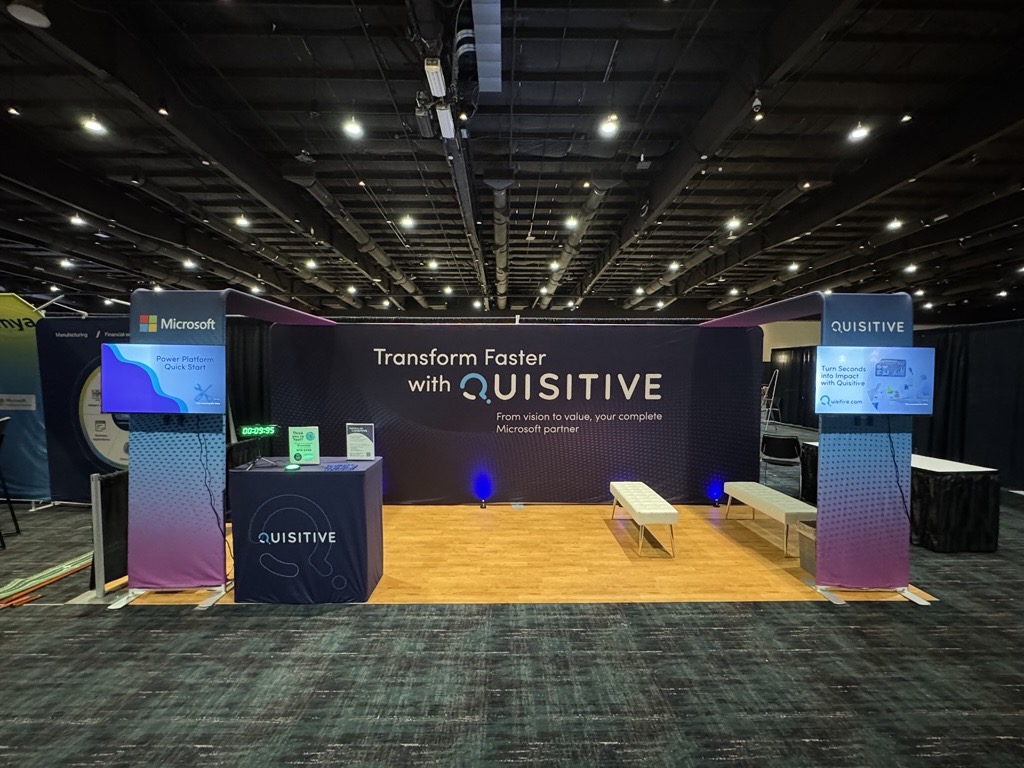
Booth #400 and the Speed Challenge. Our booth had one simple challenge: stop a clock at exactly 10 seconds. It is a lot harder than it looks and if you don’t believe us you can try your hand here. The game was a fun way to say hello, but the real value was in the conversations that followed. We talked with teams from financial services, energy, manufacturing, healthcare and construction, and many of them wanted to dig into the same topics: what their agents actually cost, where their governance has gaps, and which process they should automate next.
Seven people beat the clock. Congratulations to:
- Todd David, Business Solution Architect, Garmin International
- Namratha Marrady, Lead Application Engineer, Cox Enterprises
- Nathan Yamashiro, Associate Software Engineer, Epiq
- Rob Teich, M365 Cloud Architect, EY
- Riaan Kers, Director, Digital Applications, Saputo
- Rachel Martin, IT Manager III, Texas A&M Engineering Extension Service
- Bryan Freund, Software Support Analyst, Midtown Athletic Clubs
And congrats to Todd Davis who was drawn as the winner for $500!

Precision turned out to be much harder than speed. Anyone who has tried to automate an approval process could have told you that.
Dinner with manufacturing leaders at Morimoto. Some conversations need a table, not a booth. We brought a small group of manufacturing and industrial leaders together for a phenomenal dinner at Morimoto, and the talk kept circling back to one idea: the real payoff from AI sits in operational data. Connect sales, operations and ERP, and an agent can flag a problem days before it shows up in the monthly report. Thank you to our guests!

Lunch with healthcare leaders at MGM Skyloft. Payers, provider systems and public health leaders sat down together and got honest. Everyone wants to move fast on Copilot and agents. Nobody wants to explain a PHI exposure to their board. We spent the hour on how to have both: PHI locked down, costs visible and compliance at the table from day one. Thank you for giving us an hour of your company!
Our Skyloft suite. When the expo floor got loud, we went upstairs. Customers and Microsoft teammates used our suite for real working sessions, and some of the most candid governance and FinOps conversations of the week happened up there, far from the noise and with a view that was unmatched at the conference.

To our friends at Microsoft
Thank you to Microsoft and the conference team for five years of building an event this community circles on the calendar. Thanks to Charles Lamanna, Ryan Cunningham and the Power Platform and Copilot Studio teams for a keynote that ran on real customer stories. And thank you to the Microsoft field and partner teams who stood at our booth, sat at our tables and worked out of our suite all week. Being a Microsoft Frontier Partner with all six Solution Partner Designations puts us close to the people building this technology, and we do not take that for granted.
See you at Microsoft Ignite, November 17-20 in San Francisco!
You’ve proven Power Platform. Now let’s scale it.
Whether we talked in Vegas or you are reading this wishing you had been there, let’s keep the momentum going. Here are three places we can move fast for you:
- Secure AI. Three weeks to find and close the identity, data and governance gaps that stall AI at scale. You walk away with a 30/60/90 day plan.
- Copilot and agentic AI. Your first Copilot Studio agent live in production in weeks, plus an adoption program so people actually use it.
- Power Apps and automation. No code, low code or pro code, built on a governed foundation, with a prioritized roadmap in as little as two to four weeks.
Gift card terms: one $25 DoorDash gift card per person for a completed meeting with a Quisitive representative held between October 30 and November 30, 2026. Limited to business professionals evaluating Microsoft solutions for their organization. Not available to government employees or to anyone whose employer prohibits accepting gifts. Delivered by email within 2 business days after the meeting. DoorDash is not a sponsor of this promotion.